 Tavrin
Preparing Multi-Use Sauces and Dressings in Advance
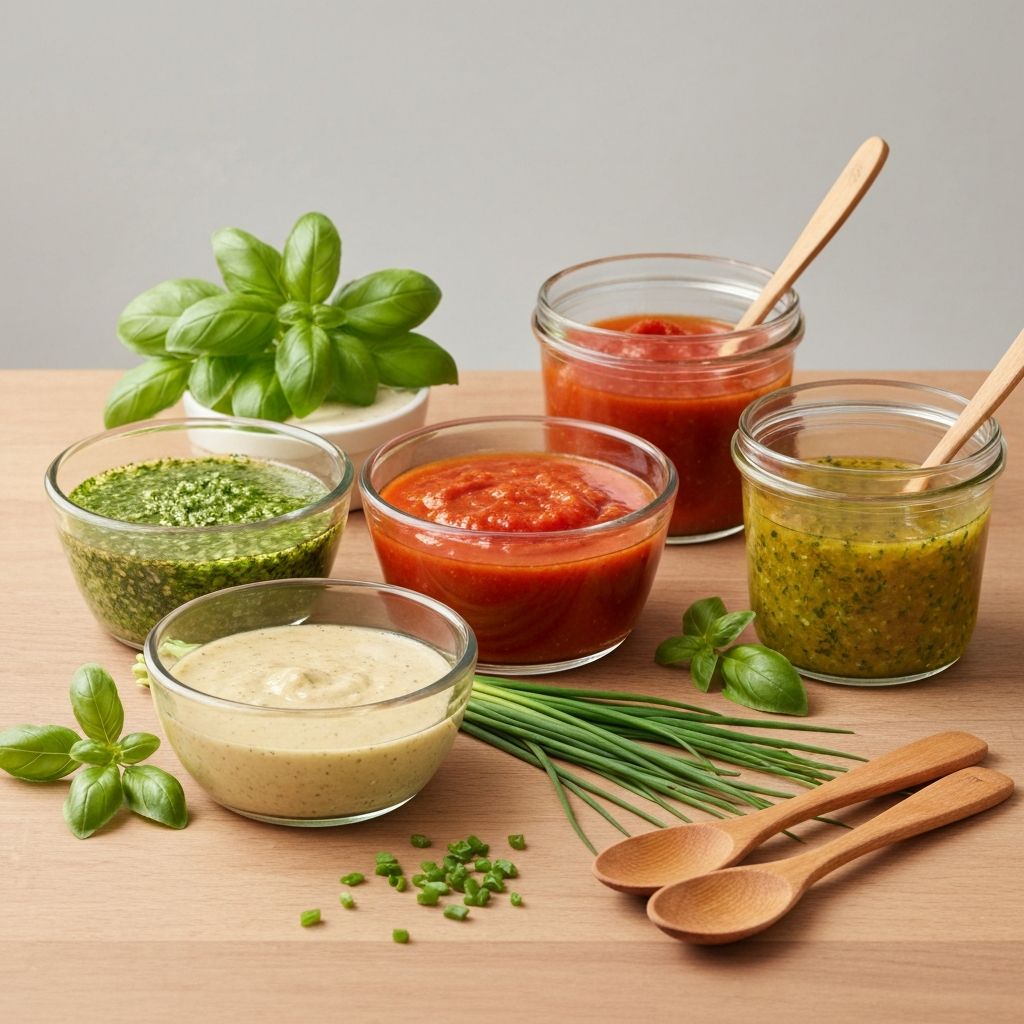
This article provides educational information on sauce and dressing preparation. It does not constitute cooking instructions or taste advice. Flavour preferences vary individually and culturally.
The Role of Finishing Elements
Neutral component bases—roasted vegetables, cooked grains, simple proteins—require finishing elements to create distinct, satisfying meals. Sauces and dressings applied at the point of consumption provide significant flavour variation without requiring preparation of entirely different ingredient bases. Preparing these finishing elements in advance reduces active preparation time at each eating occasion.
Basic Sauce Components
Most sauces and dressings consist of relatively simple elements combined in varying ratios: a fat base (oil, butter), an acid element (vinegar, citrus juice), seasonings and spices, and sometimes other components like garlic, herbs, or thickening agents.
Oil Bases: Olive oil, neutral vegetable oils, or toasted sesame oil provide fat content. Different oils impart distinct flavours and support different cooking applications. Oils remain shelf-stable when stored appropriately.
Acid Elements: Vinegars (balsamic, white, red, rice), lemon or lime juice, and other acidic components brighten flavours and balance richness. These elements stabilise sauces and support food preservation through acid content.
Seasonings: Salt, pepper, spices, and dried herbs provide base flavour layers. Fresh herbs added closer to consumption preserve their distinct characteristics.
Common Sauce Types
Vinaigrettes: Simple combinations of oil, vinegar, and seasonings work with vegetables, grains, and proteins. Variations include adding mustard, herbs, or citrus juice. These remain stable for extended periods and work across diverse applications.
Herb-Based Sauces: Combinations of fresh or dried herbs with oil and acid elements create flavour profiles suited to specific cuisines or preferences. Different herb combinations support distinct flavour directions.
Tomato-Based Sauces: Cooked combinations of tomatoes, garlic, herbs, and spices create substantial finishing elements suitable for grains and proteins. These sauces store effectively through refrigeration or freezing.
Creamy Elements: Yogurt-based dressings, tahini sauces, or other creamy components provide richness and flavour variation. These typically contain acid elements supporting preservation.
Preparation and Storage
Most sauces and dressings require minimal cooking. Combining ingredients in appropriate containers and mixing thoroughly creates functional finishing elements. Storage duration varies based on specific components and inclusion of perishable items. Oil-based dressings remain stable for extended periods. Dressings containing fresh ingredients require earlier consumption.
Glass jars with tight-sealing lids provide convenient storage and easy portability. Shaking before use remixes separated components in oil-based dressings.
Flavour Profile Variation
Different cuisines and preferences require different flavour bases. Mediterranean approaches emphasise olive oil, vinegar, and herbs. Asian-influenced approaches incorporate soy sauce, sesame oil, ginger, and garlic. Middle Eastern approaches feature tahini, lemon, and spices. Preparing multiple base recipes supports variety across the week without requiring different component bases.
Customisation and Preference
Individual taste preferences significantly influence sauce selection. Some individuals prefer bold flavours, others prefer subtle approaches. Some prefer creamy elements, others prefer acidic brightness. Experimentation with different combinations identifies personal preferences and guides future preparation decisions.
Application Flexibility
Sauces and dressings prepared in advance work across different component combinations. A prepared vinaigrette works with roasted vegetables, grains, and proteins in various combinations. Different sauce applications transform identical components into distinct meals.
Important Reminder: Sauce and dressing preferences vary individually based on culture, personal taste, and dietary approach. This information is educational. Flavour combinations should be adjusted based on personal preference and individual circumstances.